

Key takeaway: Secure a 600 INR permit in Leh to trek this 82km Himalayan route between late May and mid-September. Reaching 5,260m at Kongmaru La, the journey relies on a community-run homestay system costing roughly 1,500 to 2,500 INR daily. Proper three-day acclimatization in Leh is essential to safely navigate this high-altitude desert and its sacred Buddhist landmarks.
The Markha Valley trek reaches heights of 5,260 meters at the Kongmaru La pass and covers approximately 75 kilometers of high-altitude desert terrain.
Many hikers worry about complex logistics or long permit queues before even starting their journey. This guide explains how to secure your 600 INR permit in Leh and plan your stages to experience Ladakh without the typical administrative hurdles.
- Markha Valley Trek Ladakh Logistics and Permit Realities
- Which Route Should You Choose for the Best Experience?
- 3 Rules for Respectful Homestay Stays and Cultural Visits
- Physical Readiness and High-Altitude Gear Requirements
Markha Valley Trek Ladakh Logistics and Permit Realities
The Markha Valley trek spans 75km over 6 to 8 days, reaching 5,260m at Kongmaru La. Trekkers need a 600 INR permit from Leh, specifically during the dry window from late May to mid-September.
Before you pack your bags, let’s talk about the brutal reality of the climate and the paperwork you actually need to survive this high-altitude desert.
Late May to Mid-September Weather Windows
Ladakh is a high-altitude desert with punishing sun. Temperatures swing wildly from scorching heat to freezing nights. Ladakh remains dry even during the heavy Indian monsoon season.
The Himalayas act as a massive rain shadow. They block storm clouds, ensuring remarkably clear skies for trekking. Late May marks the official opening of the high mountain passes.
September brings a sharp chill. Fresh snow starts dusting the high peaks by late month.
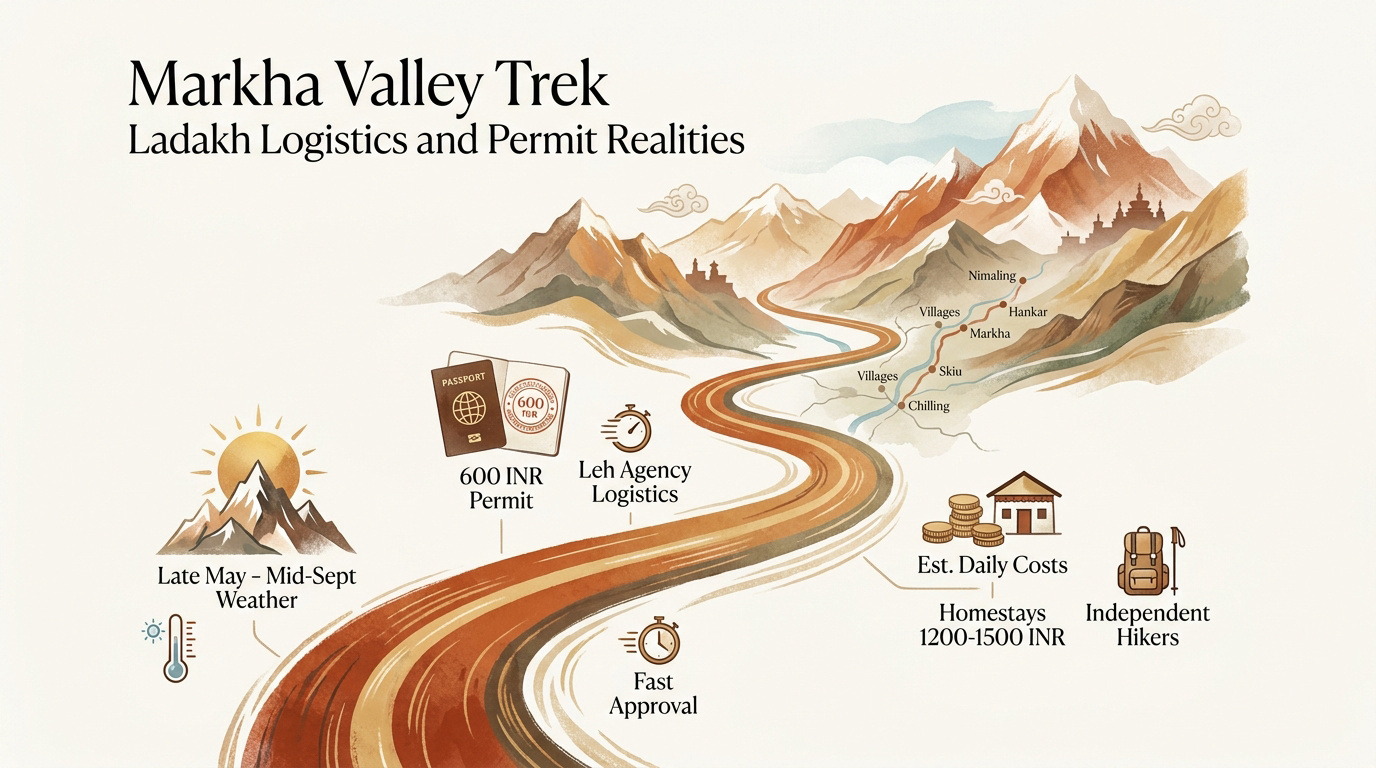
Permit Fees and Leh Agency Logistics
Getting your permit is straightforward and costs 600 INR. Visit any travel agency in Leh with your passport. No long queues exist here compared to the crowded Pangong Lake zones.
Agencies usually charge a small commission for the paperwork. It only takes a few hours. Bring original documents to ensure the agency can verify your identity quickly.
Keep the document accessible. You must present it at the Hemis National Park entrance.
Estimated Daily Costs for Independent Hikers
Budgeting for this trip is quite simple. Local homestays cost between 1,500 and 2,500 INR per night. This price includes dinner, breakfast, and a packed lunch for your journey.
Independent trekking saves significant money. You skip the high costs of professional guides and pony rentals. Self-navigating is perfectly doable for experienced hikers using a reliable map.
Carry extra cash for tea. Small parachute cafes along the trail sell basic snacks and water.
Which Route Should You Choose for the Best Experience?
Choosing the right path depends on your fitness and how well your body handles the thin Himalayan air.
Chilling vs Zingchen: Comparing Trailhead Access
Chilling offers immediate river views and a dramatic cable car crossing. Zingchen allows for a slower, steadier climb into the valley. Both routes reveal stunning Ladakh landscapes.
Logistics from Leh are straightforward. Taxis are the standard transport. Shared cabs leave early from the main bus stand to save costs.
Starting at Zingchen is often safer for beginners. It avoids a sudden jump in elevation. This helps with vital acclimatization early on.
Daily Stages from Markha Village to Nimaling
Expect five to seven hours of hiking daily. The trail follows the Markha River, requiring several crossings. Wear sandals or water shoes for safety. River levels rise significantly in the afternoon as snow melts.
The valley opens up into the high-altitude plains of Nimaling. Kang Yatse peak dominates the horizon here. It is breathtakingly beautiful and feels like another world.
Tactics for the Kongmaru La High Pass
Manage the 5,260m ascent carefully. Start your climb before sunrise. Slow, steady steps prevent exhaustion near the summit. The air is very thin here, so breathe deeply.
The descent to Hemis follows. It is steep and rocky. Trekking poles are essential to protect your knees during this long, jarring section.
Reach the top early to enjoy the Karakoram views safely. The pass gets gusty after midday. High winds can make the ridge quite uncomfortable.
3 Rules for Respectful Homestay Stays and Cultural Visits
Success on the trail isn’t just about physical stamina; it requires respecting the local Ladakhi traditions that sustain these villages.
Village Rotation and Communal Dining Rules
Local coordinators assign trekkers to specific houses via a rotation system. This ensures fair income distribution among families. Do not try to pick a house yourself. Respect the assignment to support the whole community.
Detail dining etiquette is simple. Meals are served in the communal kitchen. Remove your shoes before entering. Accept tea with both hands as a sign of respect.
Expect dry pit toilets and shared sleeping mats. There is no running water available. Bring a warm sleeping bag for added comfort and hygiene during your stay.
Monasteries, Stupas, and Sacred Landmarks
Identify Techa Gompa during your journey. This monastery sits high above the valley floor. It offers a spiritual refuge for locals. Ancient fortresses also line the cliffs. They tell stories of old trade routes and Himalayan history.
Follow instructions for religious structures. Always walk to the left of mani walls and stupas. This follows the clockwise direction of Buddhist prayer. It is a vital local custom.
Observe photography rules in temples. Ask for permission before taking photos inside. Avoid touching statues or sacred relics. Silence is expected within the monastery walls at all times.
Physical Readiness and High-Altitude Gear Requirements
Beyond cultural respect, your safety depends on how you prepare your body and your backpack for the high-altitude desert.
Acclimatization Schedules and Water Safety
Mandate the rest period. Spend at least three full days in Leh. Your body needs time to produce more red blood cells. Do not rush this process. Altitude sickness is a serious risk if you climb too fast.
Suggest water purification. Use UV filters or chlorine dioxide drops. Glacial melt often contains bacteria from livestock. Never drink directly from the streams without treating it first.
Stay hydrated constantly. Drink four liters of water daily. This helps blood flow and reduces headaches. Avoid alcohol during the first few days of the trek.
Layering Systems for Variable Mountain Weather
List mandatory clothing. Use a moisture-wicking base layer to stay dry. Add a fleece for mid-level warmth. A waterproof shell protects against sudden wind or snow. Four-season gear is necessary even in the height of summer.
Focus on insulation. Bring a high-loft down jacket for Nimaling. Nights at 4,700m are bitterly cold. You will need warmth the moment the sun goes down.
Don’t forget accessories. Pack a warm hat and gloves. Sun protection is equally vital. The UV rays at high altitude are incredibly strong and can burn quickly.
Mastering the Markha Valley trek requires three essentials: securing your 600 INR permit in Leh, allowing three days for acclimatization, and respecting local homestay traditions. Prepare your gear now to conquer the 5,200m Kongmaru La pass before the winter snows return. An unforgettable Himalayan adventure awaits those who act today.
FAQ
Do I really need a permit for the Markha Valley trek?
Yes, securing a permit is essential for this journey. While some older reports might suggest otherwise, there is a mandatory checkpoint on the road to Chilling that requires official documentation. It is highly recommended to obtain it in advance to avoid being turned back to Leh, especially since the process is straightforward and affordable.
The permit costs approximately 600 INR (about 7 USD). Local travel agencies in Leh can typically process this for you in just two to three hours. They often group individual trekkers together to meet the administrative requirements, making it a hassle-free experience for independent hikers.
What is the best time of year to hike the Markha Valley?
The ideal trekking window runs from late May to mid-September. During this period, the high passes are generally free of heavy snow, and the weather in the Ladakh rain shadow remains relatively dry while the rest of India experiences the monsoon. July and August are the warmest months, though they also attract the most visitors.
For those seeking a quieter experience with crisp air, the period from late August to mid-September is considered perfect. However, be prepared for significant temperature drops at night, as the high-altitude desert climate can shift from scorching sun during the day to freezing temperatures after sunset.
How difficult is the Markha Valley trek for average hikers?
This trek is classified as moderate to difficult, primarily due to the extreme altitude rather than technical climbing. You will be hiking for five to eight hours daily on rocky terrain, reaching a maximum elevation of 5,260m at the Kongmaru La pass. Physical fitness is important, but proper acclimatization is the real key to success.
The most challenging segment is the final day, which involves a steep ascent to the summit of Kongmaru La followed by a long, knee-jarring descent of 1,500 meters toward Shang Sumdo. Using trekking poles and maintaining a slow, steady pace is vital for managing the thin air and protecting your joints.
What kind of accommodation can I expect in the valley?
Trekkers typically choose between local homestays and camping. Homestays offer a unique cultural immersion into Ladakhi life, providing basic facilities like shared sleeping mats and dry pit toilets. These stays usually include dinner, breakfast, and a packed lunch, costing between 1,500 and 2,500 INR per night.
If you prefer camping, there are designated zones near parachute cafes, though this requires carrying your own gear or hiring a support team with horses. In the villages, a rotation system is often used to assign trekkers to specific homes, ensuring a fair distribution of income across the community.
How should I prepare for the high altitude in Ladakh?
Proper preparation starts with spending at least three full days in Leh (3,500m) before starting the trek. This allows your body to produce the necessary red blood cells to handle the thin air. Rushing into the mountains without this rest period significantly increases the risk of Acute Mountain Sickness (AMS).
During the trek, stay hydrated by drinking at least four liters of water daily and avoid alcohol. It is also crucial to use UV filters or purification drops for all water, as glacial melt can be contaminated by livestock. Always monitor yourself for symptoms like persistent headaches or nausea, and be ready to descend if symptoms worsen.